







Introduction
Screws are among the most widely used fastening components in construction, manufacturing, furniture assembly, electronics, and repair work. Although they may look simple, choosing the right screw has a major impact on structural stability, installation efficiency, corrosion resistance, and long-term performance. Different materials, head styles, thread designs, and coatings are made for different jobs, so understanding the basics can help avoid installation problems, weak fastening, or premature failure.
Table of Contents
1. What Are Screws?
Definition and Basic Structure of Screws
A screw is a threaded fastener designed to join materials together by converting rotational force into clamping force. Its basic structure usually includes the head, shank, threads, point, and drive recess. Each part affects how the screw is installed and how it performs in specific materials.
How Screws Work: Threading and Fastening Mechanism
Screws work by cutting into or engaging with a material as they are rotated. The threads create grip and hold the materials together. As the screw advances, it pulls itself deeper into the material and generates compression between the joined parts.
Screws vs. Nails vs. Bolts: Key Differences
Although all three are fasteners, they serve different purposes. Nails are typically driven by force and are often used where speed matters more than removability. Bolts usually require a nut and are used for heavier-duty fastening. Screws are often preferred when strong grip, precision, and removability are important.
Why Screws Are Widely Used in Construction and Manufacturing
Screws are popular because they offer strong holding power, are available in many designs, and can be removed or adjusted when needed. This makes them highly useful across industries where reliability and flexibility matter.
2. Common Types of Screws
Wood Screws: Designed for Timber Applications
Wood screws are made for fastening wood materials. They usually have deeper threads that provide better grip in timber and are commonly used in furniture, framing, decking, and general carpentry.
Machine Screws: Used in Metal and Machinery
Machine screws are typically used with tapped holes or nuts. They are common in mechanical assemblies, electronics, metal parts, and industrial equipment where a more precise fastening system is needed.
Self-Tapping Screws: No Pre-Thread Needed
Self-tapping screws create their own threads as they are driven into a pre-drilled or prepared hole. They are convenient for applications where threading the hole beforehand is not practical.
Sheet Metal Screws: Fastening Thin Metal Materials
These screws are designed to penetrate and hold thin sheet metal, plastic, or similar materials. Their sharp threads help secure materials that are thinner than typical structural members.
Drywall Screws: Specialized for Interior Construction
Drywall screws are commonly used to attach drywall panels to wood or metal studs. They usually have bugle heads and thread designs optimized for interior board fastening.
Concrete (Masonry) Screws: For Brick and Cement
Masonry screws are designed for concrete, brick, and block materials. They are built to provide strong holding power in hard substrates and are typically used in structural or heavy-duty applications.
3. Screw Head Types and Drive Styles
Common Head Types: Flat, Pan, Round, Hex, and Countersunk
The screw head affects appearance, seating position, and tool compatibility. Flat and countersunk heads sit flush with the surface. Pan and round heads remain above the material surface. Hex heads are common in structural or roofing work because they allow strong torque transfer.
Drive Types: Phillips, Slotted, Torx, Allen (Hex), and Square
The drive type is the recess where the tool engages the screw. Phillips is common in general-purpose use. Slotted is older but still seen in certain applications. Torx offers strong grip and reduced cam-out. Allen and square drives are used where better torque control is needed.
Choosing the Right Head Style for Your Application
The correct head style depends on whether you want the screw flush with the surface, visible above the material, or capable of handling high installation force. Appearance, load distribution, and installation method all matter.
Advantages of Different Drive Types (Grip, Torque, Durability)
Some drive types are easier to install quickly, while others reduce tool slipping and head damage. Torx and square drives are often preferred for repeated installation because they provide better tool engagement and higher torque efficiency.
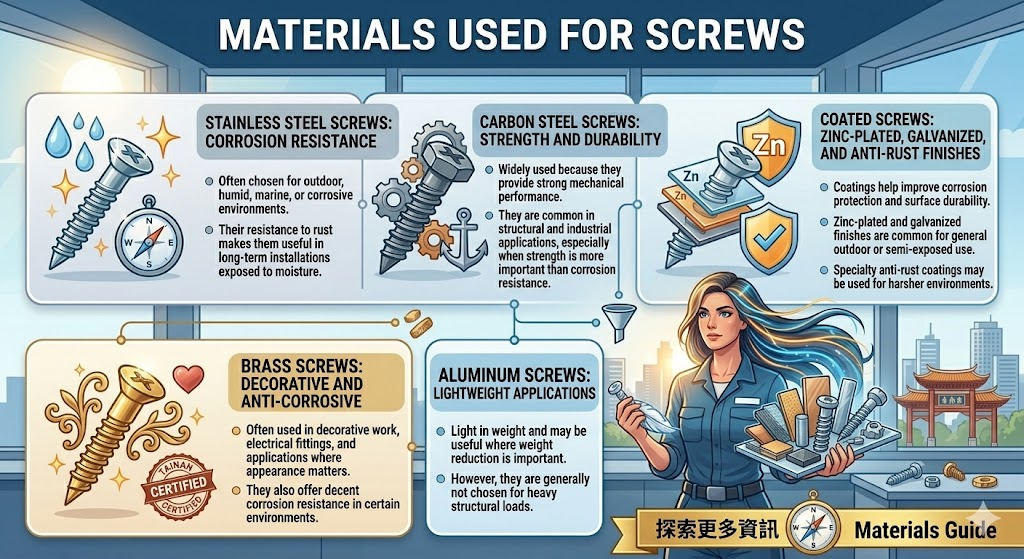
4. Materials Used for Screws
Stainless Steel Screws: Corrosion Resistance
Stainless steel screws are often chosen for outdoor, humid, marine, or corrosive environments. Their resistance to rust makes them useful in long-term installations exposed to moisture.
Carbon Steel Screws: Strength and Durability
Carbon steel screws are widely used because they provide strong mechanical performance. They are common in structural and industrial applications, especially when strength is more important than corrosion resistance.
Brass Screws: Decorative and Anti-Corrosive
Brass screws are often used in decorative work, electrical fittings, and applications where appearance matters. They also offer decent corrosion resistance in certain environments.
Aluminum Screws: Lightweight Applications
Aluminum screws are light in weight and may be useful where weight reduction is important. However, they are generally not chosen for heavy structural loads.
Coated Screws: Zinc-Plated, Galvanized, and Anti-Rust Finishes
Coatings help improve corrosion protection and surface durability. Zinc-plated and galvanized finishes are common for general outdoor or semi-exposed use, while specialty anti-rust coatings may be used for harsher environments.
5. How to Choose the Right Screw
Selecting the Correct Length and Diameter
Length and diameter should match the material thickness and the holding strength needed. A screw that is too short may not provide enough grip, while one that is too long may damage the opposite side or create installation problems.
Matching Screw Type to Material (Wood, Metal, Plastic, Concrete)
Not all screws work well in every material. Wood screws, machine screws, sheet metal screws, and masonry screws each have different thread patterns and tip designs suited to specific materials.
Thread Type: Coarse vs. Fine Threads
Coarse threads are often used in softer materials such as wood because they grip better. Fine threads are more common in harder materials or precision fastening applications where tighter engagement is needed.
Load-Bearing Requirements and Strength Considerations
Some projects require screws that can handle vibration, shear forces, or heavy loads. In those cases, material strength, screw diameter, and thread design should be selected carefully.
Environmental Factors: Indoor vs. Outdoor Use
Indoor applications may allow more flexibility in screw material and finish. Outdoor or humid environments require stronger corrosion resistance, which often means stainless steel or protective coatings.
6. How to Install Screws Properly
When to Use Pilot Holes
Pilot holes are often useful in wood, plastic, or brittle materials to reduce splitting and improve alignment. They can also make installation easier and reduce the risk of screw breakage.
Using the Right Tools: Screwdriver vs. Power Drill
Hand screwdrivers offer more control in delicate work, while power drills improve speed and efficiency. The correct bit or driver should always match the screw drive type exactly.
Avoiding Stripping and Over-Tightening
Stripping usually happens when too much force is applied, the wrong bit is used, or the screw head is worn. Over-tightening can damage the material, weaken the fastening point, or deform the screw head.
Proper Alignment and Angle Techniques
Screws should usually be driven straight and aligned with the intended fastening direction. Poor angle control may reduce holding strength and create cross-threading or damage.
Ensuring Secure and Stable Fastening
A properly installed screw should hold the materials firmly without crushing them or leaving excessive movement. The goal is a secure fit, not maximum force.
7. Common Screw Problems and Solutions
Stripped Screws: Causes and Removal Methods
Stripped screws are often caused by worn tools, incorrect bit sizes, or excessive torque. Removal may require extraction tools, rubber band grip methods, locking pliers, or carefully cutting a new slot.
Screws Not Holding: Fixing Loose Fasteners
Loose screws may result from oversized holes, weak substrate, or incorrect screw choice. Solutions may include using a larger screw, repairing the hole, or choosing a more suitable fastener type.
Broken Screws: How to Extract Them
Broken screws can occur when too much force is applied or when brittle materials are used incorrectly. Extraction often requires a screw extractor, pliers, or drilling around the broken section.
Rusted Screws: Prevention and Treatment
Rust can weaken screws and make removal difficult. Using corrosion-resistant screws from the beginning is the best prevention. In existing installations, rust penetrants and careful removal methods can help.
Cross-Threading Issues and How to Avoid Them
Cross-threading happens when the screw is not aligned properly with the hole or mating thread. Starting slowly, maintaining correct angle, and avoiding force at the beginning help reduce this risk.
8. Applications of Screws
Construction and Carpentry
Screws are heavily used in framing, decking, drywall, roofing, cabinetry, and structural wood assembly because they offer strong fastening and easier removal than nails.
Automotive and Machinery Assembly
In vehicles and machinery, screws help secure panels, brackets, housings, and smaller mechanical parts. Precision and vibration resistance are especially important in these environments.
Electronics and Precision Devices
Small screws are used in electronics because they allow compact, repeatable assembly and easy maintenance. Device enclosures, control panels, and precision components often rely on them.
Furniture Manufacturing
Furniture screws are used in cabinets, tables, shelving, and seating products. They help provide a strong connection while supporting repeated assembly or adjustment in some designs.
DIY and Home Improvement Projects
For household repairs, DIY work, shelving, mounting, and renovations, screws are often the preferred fastener because they are easy to install, remove, and reuse in non-critical tasks.
9. Checklist Before Buying Screws
Identify the Material You’re Working With
Always start by identifying whether the project involves wood, metal, drywall, plastic, or concrete. This determines the basic screw category.
Confirm Size, Length, and Thread Type
Check both the screw dimensions and thread style. Wrong sizing can lead to weak fastening or installation failure.
Choose Appropriate Coating for Environment
Indoor and outdoor conditions require different levels of corrosion protection. Moisture, humidity, and exposure should influence coating choice.
Select the Correct Head and Drive Type
The head and drive should match both the visual goal and the available tools. Ease of installation and removal should also be considered.
Consider Quantity and Quality Standards
For larger projects, consistency matters. Buying reliable screws from trusted manufacturers can reduce installation problems and improve long-term performance.
Screws are essential fasteners used across countless industries because of their strength, versatility, and reliability. Understanding different screw types, materials, head styles, and installation methods helps improve fastening performance and reduce common problems.
Choosing the right screw for a project is not just about fit. It also affects safety, durability, corrosion resistance, and overall build quality.
FAQ
Q1: What is the difference between screws and bolts?
A: Screws are typically driven directly into materials or prepared holes, while bolts usually require a nut to complete the fastening. Screws are more common in smaller or more precise fastening jobs.
Q2: What is a self-tapping screw?
A: A self-tapping screw can create its own threads as it is driven into material, which reduces the need for pre-threaded holes.
Q3: How do I prevent screws from rusting?
A: Use stainless steel or coated screws such as galvanized or zinc-plated types, especially in outdoor or damp environments.
Q4: Why do screws get stripped?
A: Stripping often happens because of the wrong tool, too much force, poor bit fit, or a worn screw head.
Q5: Can screws be reused?
A: Some screws can be reused in light-duty situations, but reuse is not recommended for critical applications if the threads or heads show wear or damage.